Yuify Is Going 3D: Inside Meshmarker
Wacom’s Next Step in Digital Authorship
28.08.2026
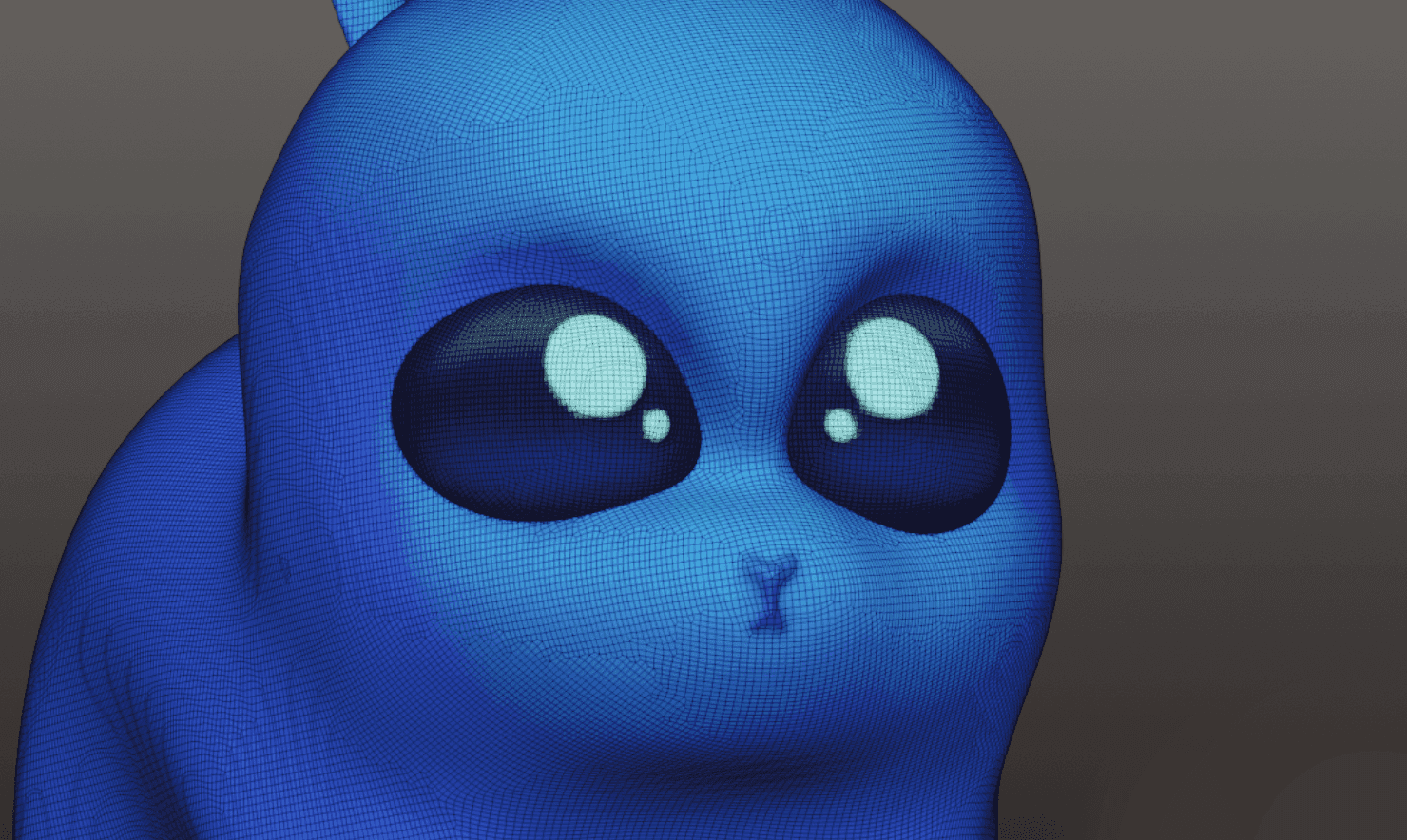
The Wacom Yuibunny
The problem every 3D artist knows
Once 3D art leaves its original software, the creator loses control. Anyone can copy, remix, re-export, compress, or convert the file without permission. This can happen before the artist even finishes naming the file "final_final_v7.blend."
That is the problem Wacom Yuify is trying to solve. - It tries to give artists recoverable proof of authorship. This is a way to establish provenance and ownership, even after a model has been copied or altered.
Why 3D is a different beast
A 2D image is fairly simple: it’s a consistent grid of pixels. A 3D model is different. It relies on vertices, faces, UV coordinates, normals, and materials. Once that model enters a production pipeline, it may be simplified, decimated, or exported into half a dozen formats. That difference matters. A 3D asset can go through a much wider range of changes than a 2D image, whether as part of a normal production pipeline or as a deliberate attempt to strip out a watermark.
That means proving authorship is not just harder, it's messier. You aren't just asking, "Who made this?" You're asking, "Can we still prove who made this after the file has passed through three studios, a marketplace, and two optimization passes?" That is the exact problem Yuify Meshmarker is built to solve.
What Yuify Meshmarker is
Yuify Meshmarker is Wacom’s new 3Dtechnology. It grows out of Wacom Yuify, a tool that proves who made 2D digital art. Yuify uses invisible Micromarks to track authorship and keep a record tied to each creator's work. Meshmarker takes that same idea and pushes it into 3D.
The idea is simple, even if engineering is not. Meshmarker links a 3D model to a decentralized identifierwithout changing the artwork itself - no visual clutter, no workflow drama, no watermark ruining your render. Just evidence.
New to Yuify? The Yuify FAQ blog explains how the platform connects digital artwork with authorship and verification records. Meshmarker is also part of Wacom's wider Creative Rights Initiative, which helps creators build trustworthy records around their work. The goal is not to interrupt the creative process. It's to build proof into the tools artists already use.
Why artists should care
Joss Giffard-Burley, Director of Ink Ecosystem Architecture at Wacom and technical lead of Yuify, puts it simply: "The whole point is to help artists prove authorship and establish credibility." Yuify was never meant to be just a tech demo. It was meant to answer a very human question: how do creators prove that the work is theirs?
That question matters whether you're an independent game artist, a product designer, or a studio managing assets across a full pipeline. If you want to build a portfolio, or defend authorship, provenance is what counts.
From Micromark to Meshmarker
Yuify already works in 2D with Micromarker, which invisibly embeds authorship information into bitmap artwork. CG Channel’s technical overview of Yuify explains how the system connects micro-marked images to permanent authorship records. Meshmarker is the 3D sibling of that idea, but the mechanics are different.
A bitmap is pixel land, and a 3D model is mesh land — different structures, different signals, different headaches. That's why Meshmarker isn't just Micromarker copy-pasted into a new format. It's a new system built for a new kind of data.
Lars Lenz, Software Engineer at Wacom and developer of Meshmarker, has led that research. He says the project started with a practical question: "Can we bring micromarking-style protection to 3D models and workflows?" From there, the project grew into a broader look at how invisible authorship can work in 3D.
How Wacom Yuify Meshmarker works, in human language
Here's the simple version. Micromarker reads 2D bitmap data. Meshmarker reads 3D mesh data. But it's not just "scan the model and hide a tag inside it." That would be too easy, and too fragile.
The real challenge is finding stable, distinctive features inside the geometry. These features need to survive normal creative changes. If your model gets edited, simplified, or converted, the authorship signal still needs to be recognizable. That's the hard part: not hiding the information, but keeping it alive through the chaos of real production work. Therefore, firstly, Meshmarker hides the watermark inside the mesh data itself. Secondly, it builds a feature representation of the mesh - a kind of fingerprint of its shape.
Lars explains that Meshmarker differs from Micromarker at a low level. But at a higher algorithmic level, the logic is similar. The system still does the same job: connect the creative work to the creator in a way that can be verified later.
Why provenance matters more than ever
This is where Yuify gets interesting. It's not really about watermarking in the old sense. It's about provenance. And provenance is a more useful word for artists, studios, collectors, and anyone tracking where creative work came from.
Joss makes the point directly: "Artists want to prove that a piece was created by them, by hand, and not generated or copied from somewhere else. That is the real issue in 2026. Not just ownership. Evidence."
With AI in the mix, that matters even more. If your work is being scraped, generated, or passed around without context, a clear chain of authorship becomes a serious professional tool, not a nice-to-have. Creative Bloq’s coverage of Yuify and AI explores this same tension between generative AI, creative ownership, and the need for artists to authenticate their work. The more creative work moves between platforms, tools, clients, and AI-assisted workflows, the more valuable a reliable record of authorship becomes.
The trust layer behind the tech
Yuify is not only about invisible marks. It's also about identity and verification. Under the hood, it uses self-sovereign identity, or SSI. In plain terms, this gives the artist a stronger, more controlled digital identity linked to their work.
That matters because a mark inside a file isn't enough on its own. You need the record, the timestamp, and the link back to the person who made it — the whole chain, not just one link.
That's why Yuify also runs authenticity checks during registration. The goal is to make sure the system stores trustworthy evidence, not just claims. In plain English: it separates real creator records from fake ones.
The vision
Joss and Lars share the same bigger picture. Joss sees Yuify as something that should stay quiet in the background, helping artists without getting in the way of the creative flow. That's an artist-friendly idea, and the right one. Most creators don't want another platform to babysit. They want tools that disappear until they're needed.
Lars is focused on making the 3D side work in the real world. He's careful not to oversell it. Meshmarker is still in development. - The team has tested it against a validation set they're working to extend. That's the foundation for the next goals: scale, resilience, and real creative workflows.
Still early, but very promising
This is not a finished product story. It's a future-facing one. Meshmarker is still being shaped, and that's fine. In fact, it's better this way. It means the final system can be built around real artist needs, not forced into a polished-but-useless shape.
Joss says the next step is bringing in artists from different industries to test Meshmarker with real data. That's the right move. Good creative tools don't come from assumptions. They come from watching how people actually work when deadlines are tight and files are messy.
Why this matters for studios too
This isn't only for freelancers proving authorship of their portfolio work. Studios face the same problem, just at a larger scale. If you handle IP across a pipeline, you need records, attribution, and audit trails — a way to prove where an asset came from and who it belongs to.
That's why Yuify's vision goes beyond a single protection tool. It's building toward authorship infrastructure for digital creativity — quietly, in the background, without making artists jump through hoops. DEVELOP3D’s coverage of Wacom Yuify places the service in the wider context of digital rights management, product design, and professional creative workflows.
The future Yuify is aiming at
Joss's ideal version of Yuify is one you barely notice until you need it. You make the work. The system stays in the background. If someone questions authorship later, you have evidence. That's a sound product vision for creators.
It also fits where the broader tech world is heading. SSI and decentralized identity are becoming more relevant across industries, not less. Yuify is positioning itself ahead of that curve. That gives it a future-proof edge that artists and studios should care about.
My Final Yuitake
Yuify Meshmarker isn't just "Yuify, but for 3D." It's the start of a bigger authorship story — one built to answer a real creative problem: how do you prove a 3D model is yours, especially after it has moved through real production workflows?
By combining invisible marking, identity verification, provenance, and a creator-first approach, Wacom is building something genuinely useful for artists. Not flashy. Not gimmicky. Just practical, protective, and quietly powerful.
That's all for now, creative crew!
Yuibunny's off to nibble some pixels and guard the blockchain burrow.
Stay micromarked, and I'll see you in the next post!
For more stories about digital authorship, art, and creative technology, keep exploring the Yuify blog.
Summary
Yuify Meshmarker is Wacom’s developing 3D authorship technology, designed to help artists prove ownership of 3D models without changing how the work looks or functions.